Let us start with the honest answer nobody in this industry wants to give you.
Yes, you can do SEO yourself. There are free tools, free guides, and free YouTube tutorials that will teach you the basics. If you have the time, the patience, and the willingness to learn, DIY SEO is genuinely possible for the foundational stuff.
But here is the question that actually matters. Should you need a professional SEO agency for small business:
We have worked with 100+ businesses across the US, UK, Australia, Canada, Dubai, and India, spanning fashion brands, B2B hardware companies, surveillance businesses, home decor stores, study abroad consultants, career coaching platforms, and healthcare professionals. And across every single one of those engagements, the pattern is consistent. The businesses that treat SEO as something they will figure out on the side get left behind by the businesses that treat it as a strategic investment with professional execution behind it.
This blog is not a sales pitch. It is an honest breakdown of what has changed about SEO in 2026, what a professional SEO agency actually does that you cannot easily replicate alone, and how to tell whether your business is ready to make that investment.
What Has Changed About SEO in 2026 That Makes This Decision More Important
SEO in 2026 is a fundamentally different game from what it was even two years ago. The businesses that are winning organic search today are not winning because they found a clever shortcut. They are winning because they built real authority, real content depth, and real technical foundations at a time when most of their competitors were still guessing.
Here is what has specifically changed and why it matters for your decision.
AI search has raised the content quality bar significantly. Google’s AI Overviews now appear at the top of search results for a growing number of queries. To get cited in those AI answers, your content needs to demonstrate genuine expertise, real experience, and specific depth that generic content simply cannot match. The days of thin, keyword-stuffed articles ranking on page one are over. What ranks now is content that demonstrates that a real expert with real experience wrote it. This is what we call EEAT, which stands for Experience, Expertise, Authoritativeness, and Trust, and it is the single most important ranking framework in 2026.
Technical SEO complexity has increased. Core Web Vitals, mobile-first indexing, structured data markup, schema implementation, site architecture, crawl budget management — these are not beginner activities. They require technical knowledge and ongoing monitoring that most business owners simply do not have the bandwidth to develop while also running a business.
Competition for organic search has intensified across every market. In the UK, US, and Australian markets especially, the businesses that invested in SEO seriously two to three years ago now have domain authority advantages that take sustained, strategic effort to overcome. Getting onto page one for any meaningful keyword in these markets in 2026 requires a level of strategic depth that casual part-time SEO simply cannot deliver.
SEO now connects directly to paid advertising performance. As we have seen with clients running Google Ads, your SEO quality directly affects your Quality Score, which affects how much you pay per click and how often your ads appear. Weak SEO is not just costing you organic traffic. It is making your paid campaigns more expensive at the same time.
What a Professional SEO Agency for Small Business Does That You Cannot Easily Do Alone
This is where most agency blogs give you a generic list of services. We are going to give you something more useful: the specific things that genuinely require professional expertise and why.
Building a keyword and content strategy around search intent, not just search volume. The biggest SEO mistake we see business owners make when they try to do it themselves is targeting keywords based on volume without understanding intent. Someone searching “SEO tips” wants to learn. Someone searching “SEO agency for my ecommerce business” wants to hire someone. Targeting the wrong intent means attracting traffic that never converts. Mapping every piece of content to the right intent at the right stage of the buyer journey is a strategic skill that takes years to develop well.
Technical SEO auditing and fixing. Most small business websites have technical issues that are silently killing their rankings. Slow page load times, broken internal links, duplicate content, missing schema markup, incorrect canonicalisation, crawl errors — these are not visible to the naked eye but Google sees all of them. We have taken on clients whose websites looked perfectly fine on the surface but had fifteen to twenty technical issues suppressing their rankings. Identifying and fixing these requires specialist tools and expertise.
Building topical authority systematically. Google does not just rank individual pages. It assesses whether your entire website demonstrates deep expertise in a specific topic area. This is why a single blog post rarely moves the needle but a cluster of twelve to fifteen interconnected, well-researched pieces on related topics can dramatically improve your rankings across the board. Planning and executing a topical authority strategy is a multi-month project that requires content strategy, keyword research, internal linking architecture, and consistent execution all working together.
Earning quality backlinks. Links from other credible websites pointing to yours remain one of the strongest ranking signals Google uses. Building genuine backlinks requires outreach, relationship building, content assets worth linking to, and knowledge of which links are worth pursuing versus which ones will get your site penalised. This is one of the most time-intensive and expertise-dependent activities in all of SEO.
Keeping up with algorithm changes. Google makes thousands of algorithm updates every year. Major core updates can significantly shift rankings overnight. A professional SEO agency monitors these changes, understands their implications for your specific site, and adjusts strategy accordingly. A business owner doing their own SEO will almost always find out about a major algorithm change weeks after the damage is already done.
Signs Your Business Has Outgrown DIY SEO
Not every business needs to hire a professional SEO agency immediately. Here is how to know when you have reached the point where professional help will deliver more value than continuing to handle it yourself.
You have been doing SEO for six months or more and organic traffic is flat. If consistent effort over a meaningful period is not moving the needle, something in your strategy or technical foundation is broken. Finding what that is requires an expert audit.
You are spending more than ten hours a week on SEO-related activities. Ten hours a week is twenty five percent of a standard working week. If SEO is taking that much of your time, you are either not running your business as effectively as you should be, or you are not doing SEO as effectively as a specialist would. Either way the numbers do not work in your favour.
Your competitors are consistently outranking you despite you having a better product or service. This is almost always a strategy and execution gap, not a product gap. A professional SEO agency can analyse exactly what your competitors are doing better and build a plan to close that gap systematically.
You are scaling your business and need leads to grow predictably. Organic SEO done well is the most cost-effective lead generation channel available to small businesses over time. If growth is a priority and paid ads are your only current source of leads, building an organic foundation with professional help is the highest ROI investment you can make right now.
You tried SEO yourself and your rankings dropped. This is a serious signal. Common DIY SEO mistakes like over-optimising anchor text, building low-quality links, creating thin content, or implementing technical changes incorrectly can actively harm your rankings. Recovering from a Google penalty or an algorithmic demotion requires specialist knowledge.
Real Results: What Professional SEO Actually Delivers
We want to be direct about what you can realistically expect from professional SEO because the industry has a serious problem with overpromising.
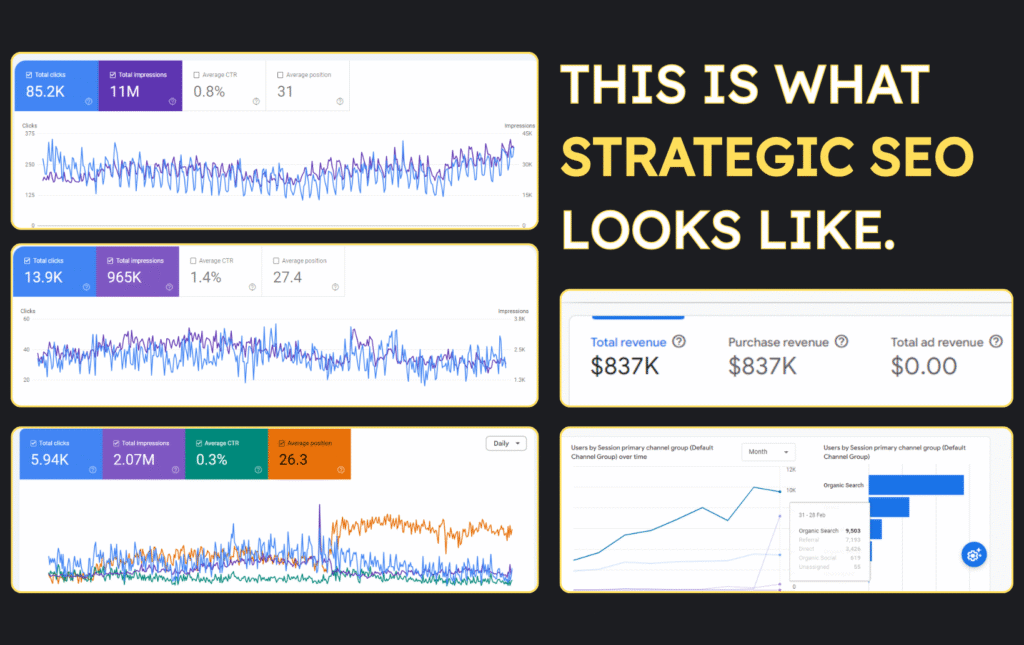
Here is what we have delivered for real clients across real markets.
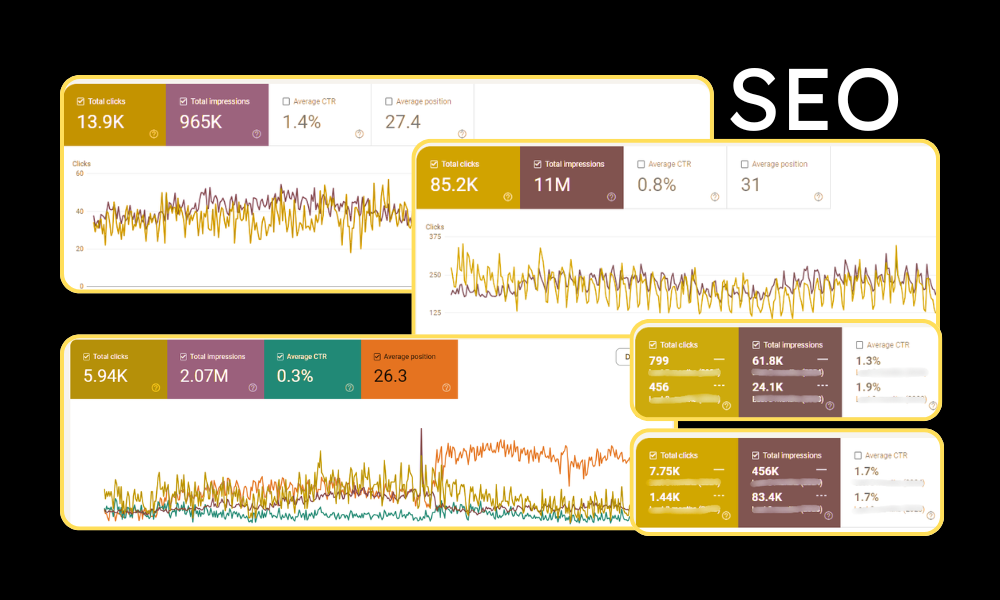
For a home decor brand, professional SEO generated over $900 in direct revenue from organic traffic alone, alongside 50 million plus impressions, a 1.4 percent click-through rate, and three to four thousand ranked keywords. None of that required ongoing ad spend once the organic foundation was in place.
For a study abroad consulting business, a focused SEO and content strategy delivered 50 percent organic growth in keyword rankings and impressions within a few months of consistent execution.
For a resort business, a combination of local SEO and content marketing generated 200 plus leads, demonstrating that even businesses in traditionally offline industries can build significant lead pipelines through organic search.
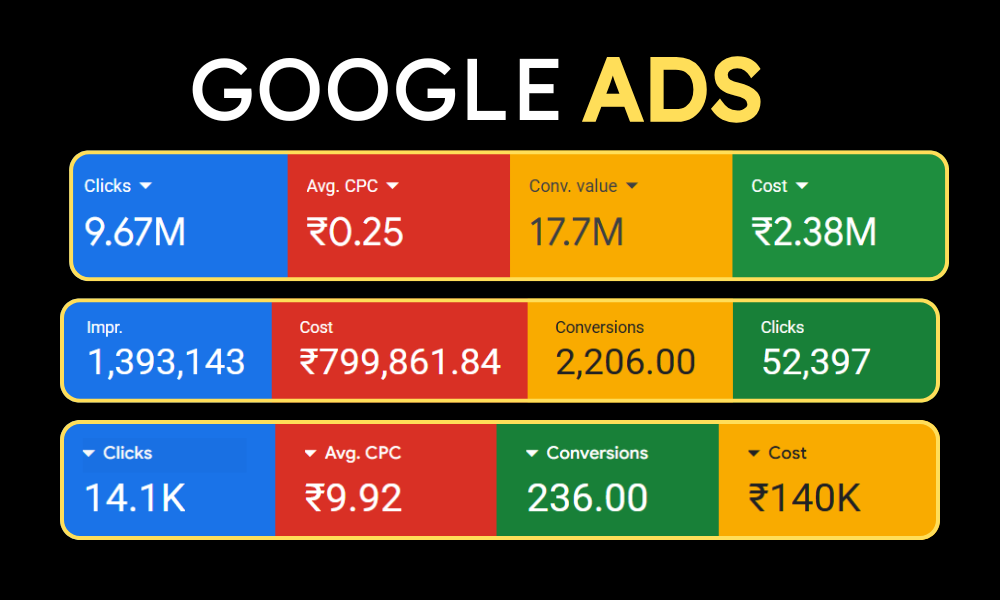
Across our broader client base, we have driven 9.67 million plus clicks, generated over $837,000 in revenue through SEO-supported campaigns, and built organic keyword portfolios of three to four thousand ranked terms for businesses that started with zero organic presence.
These results did not come from a single tactic or a single month of work. They came from consistent, strategic execution over time with a clear goal behind every action.
How to Choose the Right SEO Agency
This section could save you a significant amount of money and frustration. The SEO industry has more bad actors than almost any other professional services category. Here is exactly what to look for and what to run from.
What to look for in a professional SEO agency:
They ask about your business goals before they talk about keywords or rankings. An agency that jumps straight into technical SEO language without understanding what your business actually needs is not thinking strategically about your success.
They show you real results from real clients with real numbers. Not just testimonials. Actual data. Traffic growth, keyword rankings, leads generated, revenue attributed to organic. If they cannot show you this, they have not delivered it.
They are transparent about what they are doing and why. You should receive a clear monthly report showing exactly what was done, what metrics moved, and what is planned for the following month. Vague updates and jargon-heavy reports designed to impress rather than inform are a red flag.
They tell you honestly when SEO is not the right solution for your immediate problem. If a business genuinely needs customers this week, SEO is not the answer for that specific need. An honest agency says so and recommends the right channel instead.
They have experience in your specific industry or market. Digital marketing for a B2B hardware company requires completely different keyword strategy, content approach, and link building tactics compared to a D2C fashion brand. Generic SEO applied to every business type regardless of context is a recipe for average results.
Red flags to watch for:
Any agency that guarantees specific Google rankings. Google’s algorithm is not something any agency controls. Guarantees are either lies or the setup for black-hat tactics that will eventually get your site penalised.
Agencies that are not transparent about who is actually doing the work. Many agencies sell work and outsource it to cheap labour without telling the client. Ask directly who will be working on your account and what their experience level is.
Anyone who cannot explain their strategy in plain language. Complexity used to hide a lack of clear thinking is one of the most common problems in the agency world. If you cannot understand what they are proposing to do and why, that is the agency’s failure not yours.
Lock-in contracts with no performance benchmarks. A confident agency offers clear deliverables and performance expectations. Vague long-term contracts with no accountability built in protect the agency, not you.
How Much Does a Professional SEO Agency Cost in 2026?
Pricing varies significantly by market and by the scope of work involved. Here is an honest breakdown across ByteCraftNova’s four core markets.
India: A focused SEO engagement covering on-page SEO, content, and local SEO typically ranges from Rs. 15,000 to Rs. 50,000 per month depending on scope. Entry-level local SEO focused work starts from around Rs. 5,000 to Rs. 8,000 per month. We cover this in full detail in our guide on digital marketing costs for small businesses in India.
UK: Professional SEO services for small businesses in the UK typically range from £500 to £2,500 per month for a focused engagement. Competitive niches in major cities like London command higher investment. Entry-level SEO support starts from around £300 to £500 per month for basic on-page and local work.
Australia: SEO agency costs in Australia typically range from AUD 800 to AUD 3,000 per month for small business focused engagements. Local SEO focused work for businesses serving a specific region starts from around AUD 500 per month.
US: Professional SEO services in the US range from $750 to $3,500 per month for small business focused work. Highly competitive niches and major metro areas command the higher end of this range.
The important context for all of these numbers is the comparison to what the same quality of work costs globally. As we noted in our digital marketing cost guide, the same strategic SEO work that costs $2,500 per month in the US can be delivered at significantly lower cost through an Indian agency without sacrificing quality, which is why Indian digital marketing talent is increasingly sought after by global businesses.
What matters more than the absolute cost is the return on that investment. An agency charging Rs. 30,000 per month that generates 200 leads is delivering far better value than an agency charging Rs. 10,000 that generates nothing measurable.
When You Do NOT Need a Professional SEO Agency Yet
We said at the start that this blog would be honest and we meant it.
If your business is brand new with no validated product-market fit, invest in validation before SEO. SEO builds long-term organic traffic. If you do not yet know who your customer is or whether they want what you are selling, SEO investment is premature.
If your budget is under Rs. 10,000 or $150 per month, start with DIY SEO basics. Set up Google Search Console and Google Analytics. Optimise your Google Business Profile. Write one helpful blog post per week. These foundational activities cost nothing but time and will build the base that professional SEO can later accelerate. We cover all of these starting steps in our guide on what is SEO for small business owners.
If you have not yet fixed the basics on your own website, a professional agency will spend the first month doing what you could have done yourself. Get your page titles right, add your location keywords, fix your site speed, and set up your Google Business Profile before bringing in professional help. That way your agency investment goes toward strategy and growth rather than fixing basics.
The right time to hire a professional SEO agency is when you have a validated business, a website with the basics in place, a growth goal that organic search can support, and a budget to invest consistently for at least six months.
What to Do Next
SEO in 2026 is not a set-and-forget activity. It is a compounding investment that rewards businesses who approach it strategically, execute it consistently, and measure it honestly. The businesses winning organic search today started building their foundations twelve to eighteen months ago. The best time to start was then. The second best time is now.
If you are ready to stop guessing and start building organic growth with a team that has delivered real results across four continents, get in touch with ByteCraftNova. The first conversation is always free and we will tell you honestly whether professional SEO is the right investment for your business right now or whether there are higher priority moves to make first.
FAQ
How long does it take to see results from hiring an SEO agency?
For a business with an existing website and some online presence, early ranking movements and traffic improvements typically begin showing within two to three months of professional SEO work starting. Meaningful organic lead generation usually takes four to six months of consistent execution. New websites with no existing authority take longer, typically six to nine months before significant organic traffic builds. Any agency promising results in two to four weeks is either lying or using tactics that will eventually harm your site.
Can I do SEO myself and hire an agency later?
Absolutely, and for many early-stage businesses this is the right approach. Learn the basics, implement the foundational elements yourself, and bring in professional help when your business has grown to the point where the investment makes sense and the stakes of getting it wrong are higher. Our guide on how does SEO works is the right starting point for DIY SEO foundations.
What is the difference between an SEO agency and an SEO freelancer?
An SEO freelancer is typically one person handling your account, which means their availability, bandwidth, and skill set are limited to that one individual. An agency brings a team with specialised skills across content, technical SEO, link building, and strategy. The trade-off is cost. Freelancers are cheaper but carry more risk around consistency and depth. Agencies cost more but offer broader capability and more accountability. We cover this comparison in detail in our digital marketing cost guide.
How do I know if my SEO agency is actually working?
Track three numbers every month without exception. Organic traffic in Google Analytics to see if more people are finding you through search. Keyword rankings in Google Search Console to see if you are moving up for your target terms. And leads or revenue attributed to organic traffic to see if the traffic is converting. If your agency cannot show you clear movement in at least two of these three metrics within three months, ask direct questions about why and what is changing in the strategy.
Is SEO worth it for a very small business with a limited budget?Yes, but the approach needs to match the budget. A very small business with a limited budget should prioritise local SEO and Google Business Profile optimisation first because these deliver the fastest return for the lowest investment. Full-service professional SEO becomes worth the investment when the business has grown to the point where organic traffic can meaningfully impact revenue. Start with the local SEO checklist for small businesses to build your foundation before investing in full professional SEO services.



1 Comment
https://bytecraftnova.com/seo-services/