If you’ve searched anything on Google lately, you’ve probably noticed something different. Before you even scroll to the familiar blue links, there’s already a neatly summarized answer sitting at the top of the page. That’s an AI Overview, and it’s quietly rewriting the rules of search. For anyone running a business, marketing a brand, or working in search marketing, this shift isn’t a minor update — it’s one of the biggest changes to hit search since Google itself became the default way we look things up online.
At ByteCraftNova, we’ve been tracking this shift closely across our client base, and I want to walk you through what’s actually changing, what it means for how agencies deliver results today, and what we’ve personally observed while helping clients adapt.
What Are AI Overviews & AI Search, Really?
AI Overviews are Google’s AI-generated summaries that appear above traditional search results, pulling information from multiple web pages to answer a query directly. Alongside this, tools like ChatGPT Search, Google’s Gemini, and Perplexity have become genuine search destinations in their own right. People aren’t just Googling anymore — they’re asking AI assistants directly and expecting a complete, conversational answer.
This combined shift is what the industry now calls AI search. And it’s changing what modern SEO providers need to focus on to keep clients visible.
The Numbers: How Much Has Search Actually Changed
Informational and how-to searches are seeing AI-generated summaries on a large share of results pages, and this coverage keeps expanding month over month. The practical effect is fewer clicks landing on individual websites for basic queries, since users often get their answer without leaving the search results page.
But here’s the part that gets missed: the traffic that does come through from an AI citation tends to be far more qualified. When someone clicks through after reading a synthesized AI answer, they’re usually already convinced you’re a relevant source — they’re moving down the funnel faster than a typical organic visitor.
From “Ranking” to “Being Cited”: The New Success Metric
For years, the goal of SEO was simple: rank in the top 10, ideally position one. That’s no longer the full picture. Being cited inside an AI Overview or an AI chatbot’s answer is now a separate outcome — and it doesn’t always follow your organic ranking.
Here’s something we noticed firsthand that most blogs don’t talk about: a large chunk of the pages getting cited in AI Overviews right now aren’t blog articles or service pages at all — they’re business listing and citation sites. Directories, aggregator platforms, and profile pages are showing up as trusted sources far more often than expected. That’s an important, and honestly underreported, insight for any business hoping to show up in AI answers without a massive budget.
Traditional SEO vs AEO vs GEO — What’s the Difference?
- Traditional SEO focuses on ranking your website for keywords in classic search results.
- AEO (Answer Engine Optimization) focuses on structuring your content so AI systems can lift a clear, direct answer from it.
- GEO (Generative Engine Optimization) focuses on making your brand a citable, trustworthy source within AI-generated responses across multiple platforms.
Here’s the truth we tell every client: these aren’t three separate strategies competing for budget. AEO and GEO are built on top of traditional SEO, not instead of it. Tools like ChatGPT and Claude rely on web search and indexed web data to answer questions. If your site isn’t ranking or visible in general search, you have almost no chance of being surfaced in AI search either. So any SEO agency telling you to skip the fundamentals and jump straight to “AI optimization” is skipping a step that AI itself still depends on.
How This Impacts Different Types of Businesses
Local businesses: Local SEO services matter more than ever, since AI tools increasingly cross-check directories and listings to confirm legitimacy before recommending a business.
E-commerce brands: Product-specific queries are increasingly being summarized, making structured product data and clear specifications essential.
Service-based businesses: Trust signals — reviews, case studies, and clear expertise — carry more weight, since AI systems favor sources that demonstrate real experience over generic sales pages.
Small businesses and startups: The good news is that showing up in AI answers doesn’t require a massive budget. Clean business listings, a few genuine reviews, and clear, well-written FAQs can go a long way — which is why even businesses looking for affordable SEO services can compete for AI visibility if the basics are handled properly.
What SEO Agencies Are Doing Differently in 2026
This is where we’ve adjusted our own approach at ByteCraftNova, and where a lot of legacy agencies fall short if they haven’t evolved:
- Digital PR and guest posting on relevant business platforms. Getting mentioned and linked from credible external sources builds the kind of brand signal AI systems look for when deciding what to cite.
- Strengthening business listings and citation sites. Since these pages are already winning AI citations, keeping them accurate, consistent, and detailed across platforms is now a core part of local SEO services, not an afterthought.
- Adding clear FAQs and excerpts directly on blog and service pages. Short, well-structured question-and-answer blocks make it far easier for AI systems to lift a clean answer straight from your content.
- Doubling down on structured data and schema markup, so search engines and AI models can accurately interpret what a page is about.
- Prioritizing E-E-A-T — real experience, author credibility, and original insights — since generic, AI-written content is having a harder time earning citations than authentic, practitioner-led content.
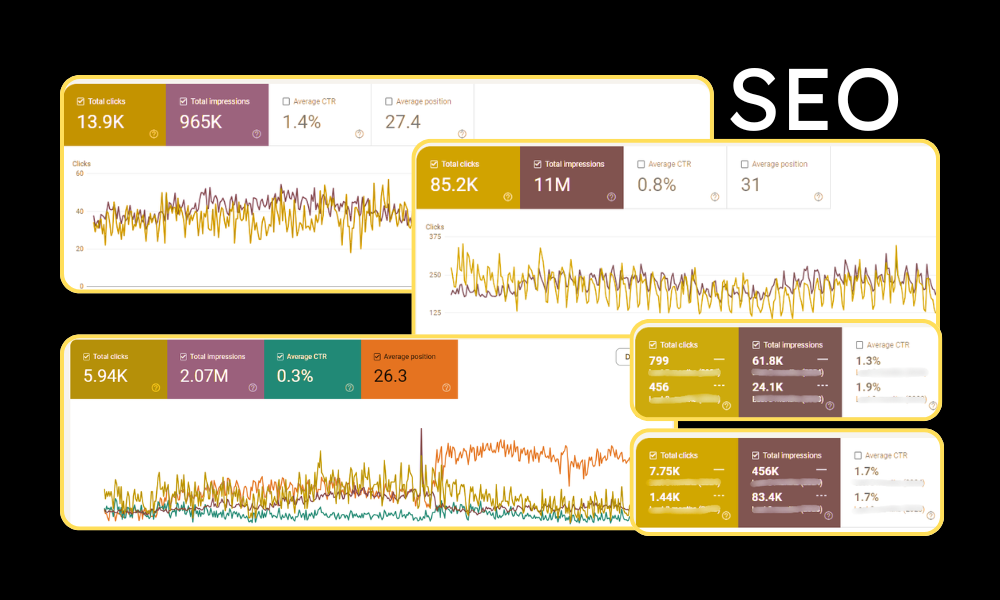
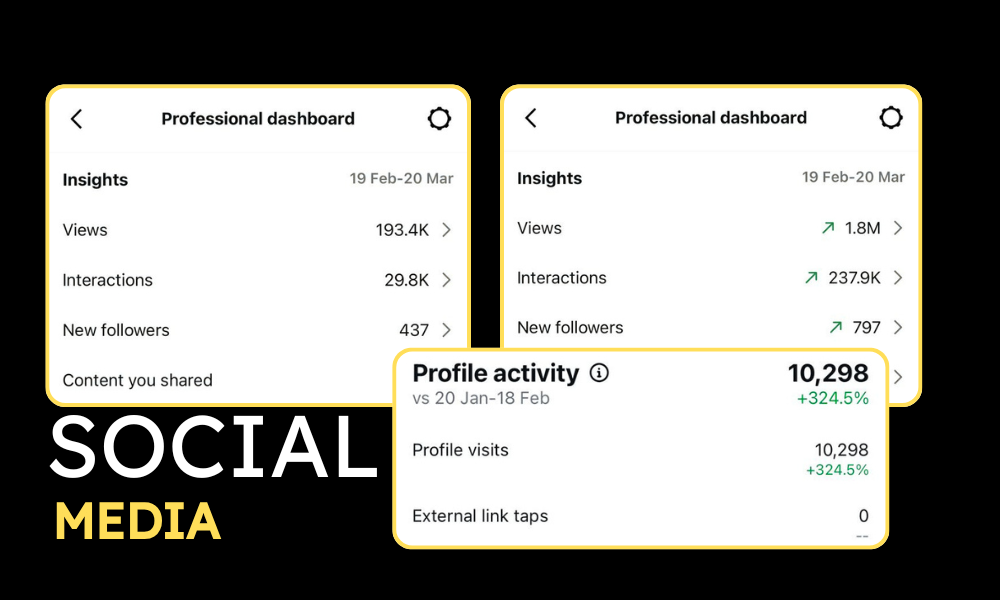
We saw this play out directly with one of our education-sector clients based in Indore. After we layered in stronger business listings, some digital PR, and clearer FAQ blocks on their site, we started noticing their citations pick up on both ChatGPT and Gemini — and it wasn’t just a vanity metric. It led to an actual referral client reaching out after finding them through an AI-generated answer. We’ve since started seeing traffic from ChatGPT and Gemini show up in analytics for a few other clients too. The numbers are still early, but the pattern is consistent enough that we now treat AI citation tracking as a standard part of reporting.
Is Traditional SEO Dead? (No — Here’s Why It’s Still the Foundation)
We get asked this constantly, and the honest answer is no. AI search doesn’t replace traditional SEO — it sits on top of it. Every AI model that performs live web search is still reading indexed pages, evaluating backlinks, and weighing relevance signals the same way search engines always have. If a business skips fundamentals like technical SEO, quality content, and backlinks in favor of chasing “AI SEO” as a separate service, they’re building on a weak foundation. A credible SEO agency in 2026 treats AI visibility as an extension of solid fundamentals, not a replacement for them.
How to Know If Your Website Is “AI Search Ready”
A quick self-check:
- Does your homepage and key service pages clearly answer “what do you do and who is it for” in the first few lines?
- Do you have FAQ sections with direct, concise answers on your important pages?
- Is your business information consistent across Google Business Profile, directories, and listing sites?
- Do you have original content — case studies, data, or real client outcomes — rather than generic, templated copy?
- Is your site technically sound, fast, and properly structured with schema markup?
If you’re answering “no” to more than one of these, that’s usually the first gap worth closing.
What to Ask Your SEO Agency About AI Search Optimization
Before signing on with any SEO agency, ask directly:
- How do you track visibility in AI Overviews, ChatGPT, and Gemini — not just Google rankings?
- What’s your approach to business listings and digital PR as part of AI search visibility?
- Can you show any examples of client citations improving in AI-generated answers?
- How do you balance affordable SEO services with the added work AI search now requires?
If an agency can’t answer these with specifics, they’re likely still running a 2022 playbook in a 2026 search landscape.
Conclusion
AI Overviews and AI search have genuinely changed what it means to be visible online — but they haven’t made SEO obsolete. If anything, they’ve raised the bar. Businesses now need an SEO agency that understands both the fundamentals and the new AI layer sitting on top of them: strong technical SEO, credible local SEO services, consistent business listings, digital PR, and content built around real experience and clear answers.
This is exactly why we believe the agencies that will win in this new era are the ones willing to be transparent about what’s actually working, rather than repackaging old tactics under a new “AI SEO” label.
At ByteCraftNova, we’ve seen firsthand how this combination — not one shortcut or the other — is what actually earns a business a spot inside an AI-generated answer, and eventually, a real client on the other end of it.
If you’re wondering whether your current SEO strategy is AI-search ready, that’s exactly the kind of audit we do for clients every day — and it doesn’t have to be expensive to get right.