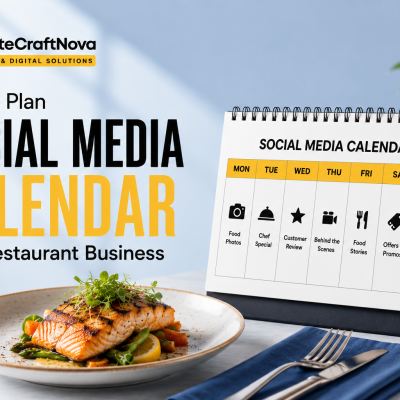
Here is what most small businesses do with content. They post something on Instagram when they remember. They write a blog when they have time. They go quiet for two weeks, panic, post three things in one day, and then go quiet again.
Sound familiar?
The problem is not that you do not have good ideas. The problem is that you have no system behind your content. And without a system, even great content gets inconsistent, unfocused, and invisible.
A content calendar fixes that. Not because it is a fancy organisational tool, but because it forces you to plan with purpose. Every post, every blog, every piece of content has a reason for existing and a goal it is working toward.
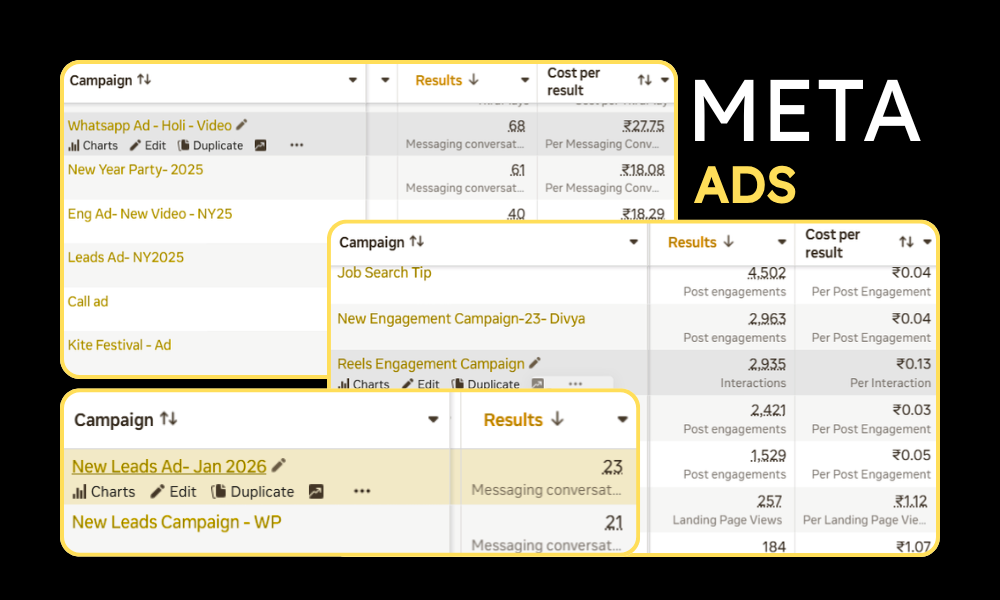
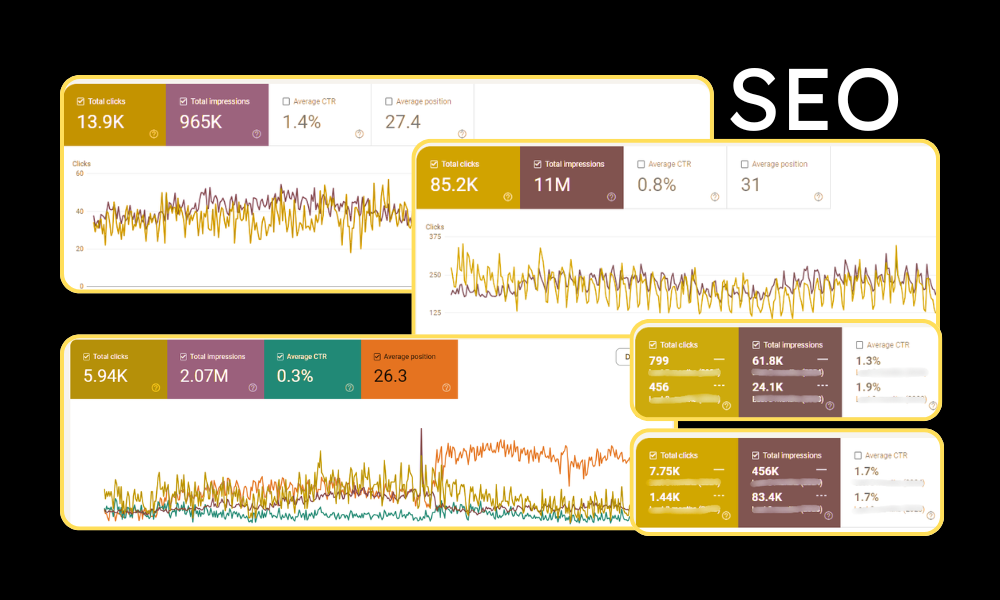
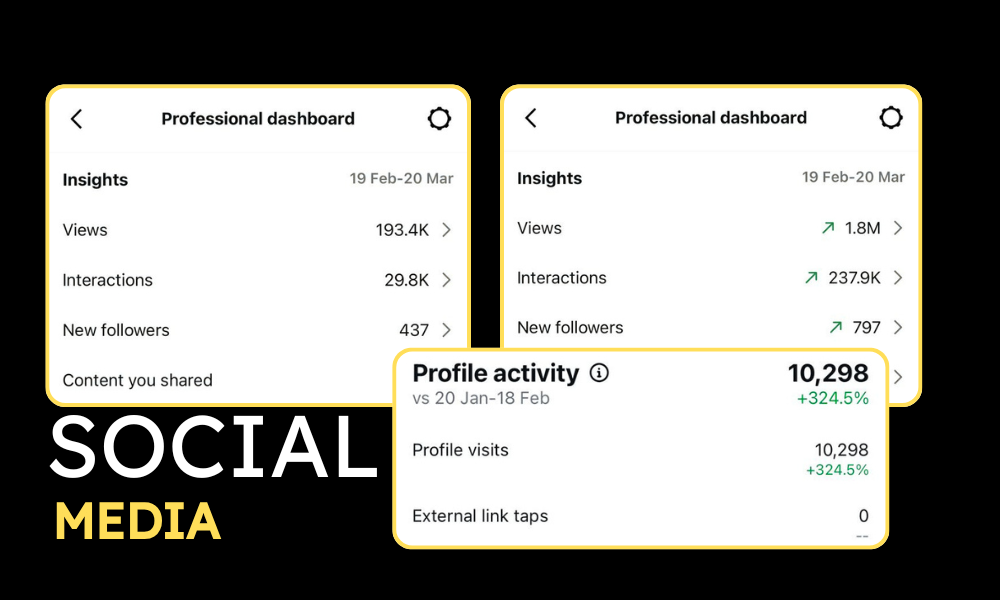
We have built content calendars for businesses across study abroad consulting, healthcare, and education, and the results speak for themselves. A doctor’s clinic we worked with went from 700 followers to 2,500 with consistent, planned content. A study abroad brand started seeing strong view numbers once we put a structured calendar behind their content. A spoken English coaching business started getting genuine comments and shares, not just passive scrolls, once their content had a clear strategy behind it.
None of that happened by posting randomly. It happened because of a plan.
This guide gives you that plan, plus a free content calendar template for small businesses you can start using today.
What a Content Calendar Actually Does for Your Business
Most people think of a content calendar as a scheduling tool. It is much more than that.
When building a content calendar correctly, it is a business growth tool. It aligns every piece of content you create with a specific business goal, a specific audience, and a specific point in your customer’s journey from discovering you to deciding to buy from you.
Here is what a proper content calendar template for small business actually does.
It stops you from creating content for the sake of creating content. Every post, every blog, every reel has a job. Awareness, consideration, or conversion. When you know what job a piece of content is doing you can measure whether it is doing it well.
It builds topical authority over time. Google rewards websites and social media profiles that consistently publish content around a specific set of topics. Random posting kills this. Planned, clustered content builds it. We cover how this connects to your organic rankings in our guide on what is SEO for small business owners.
It keeps you consistent without burning out. Consistency is the single most important factor in content marketing. A content calendar lets you batch your thinking, plan ahead, and show up regularly without scrambling for ideas every day.
It makes your content work harder across multiple channels. A well-planned blog post becomes three social media posts, a short video script, and a newsletter section. A content calendar helps you see those connections and squeeze more value out of every idea.
How to Create a Content Calendar That Drives Real Results
Before you open a spreadsheet or download a template, you need to answer four questions. These are the same four questions we work through with every new client before we touch any content.
What is the primary business goal for this content? Are you trying to generate leads, build brand awareness, drive traffic to your website, or position yourself as an expert in your space? The answer to this question determines everything about what content you create and how you create it.
What is your positioning? How do you want your audience to perceive you compared to your competitors? Are you the affordable option, the premium expert, the most accessible, the most results-driven? Your content needs to consistently reinforce this positioning in every single post. If your positioning is unclear, your content will feel scattered even when it is well written.
What are your content pillars? Content pillars are the three to five core topics your brand will consistently talk about. Everything you post should fall under one of these pillars. For a digital marketing agency, pillars might be SEO, paid advertising, content strategy, business growth, and client results. For a diabetes doctor, pillars might be nutrition, lifestyle, medication management, patient stories, and myth-busting. Your pillars keep your content focused and build topical authority over time.
Who is your audience and where are they? A content calendar built for LinkedIn looks completely different from one built for Instagram. The platform shapes the format, the tone, the length, and the posting frequency. Know exactly who you are talking to and where they spend their time before you plan a single post.
Once you have answered these four questions, building your content calendar becomes straightforward. Everything flows from these answers.
The Free Small Business Content Calendar Template
Here is the structure we use when building content calendars for clients. You can replicate this in Google Sheets, Notion, or even a physical planner.
The columns your content calendar needs:
Date — The specific date the content goes live. Not the week, not the month. The specific date. Vague planning leads to vague execution.
Platform — Where is this content being published? Instagram, Facebook, your blog, LinkedIn, or Google Business Profile. Each platform gets its own row, even if the content is similar.
Content Pillar — Which of your three to five core topics does this piece fall under? This column helps you spot immediately if you are over-posting on one topic and neglecting others.
Content Type — Is this a carousel post, a reel, a static image, a blog post, a story, or a Google Business Profile update? Different content types serve different purposes and audiences at different stages.
Topic and Caption Idea — A one-line description of what this specific piece is about. Not the full caption yet, just the core idea. This is where your keyword research feeds in.
Goal — Awareness, engagement, or conversion. Every piece of content should have one of these three goals. This column keeps you honest about whether your calendar is balanced across the full customer journey.
Status — Not started, in progress, ready to publish, or published. This column turns your calendar from a plan into an execution tracker.
Notes — Any specific references, links, hashtag sets, or design directions for this piece.
For Instagram and Facebook specifically, we recommend a minimum of 12 posts per month. That is three posts per week as a non-negotiable baseline for any small business that wants to build a real presence on social media. Less than that and you are simply not visible enough for the algorithm to work in your favour.
For your blog, one well-researched, properly SEO-optimised post per week is the minimum to build organic traffic meaningfully. We cover exactly how to structure those blog posts for maximum ranking potential in our guide on [how to write a blog post that ranks on Google].
How to Fill Your Calendar with the Right Content Ideas
This is where most small businesses get stuck. They sit down to fill the calendar and go completely blank. Here is the research process we use for every client to generate months of content ideas in one sitting.
Start with your business goal. If the goal is lead generation this month, a significant portion of your content should be moving people toward a decision. That means testimonials, case studies, result posts, and direct offers alongside your educational content.
Research your audience’s actual questions. Go to Google and type your main topic into the search bar. Look at the People Also Ask section. Every question in there is a content idea that real people are actively searching for. Do the same on Quora and Reddit. The conversations happening on those platforms tell you exactly what your audience is confused about, worried about, and looking for answers on.
Look at what your competitors are doing. Not to copy, but to identify gaps. What topics are they not covering? What questions are their followers asking in the comments that are going unanswered? Those gaps are your opportunities.
Map your content ideas to your pillars. Take every idea you generated from the above research and assign it to one of your content pillars. If you have five pillars and twelve posts per month, you have roughly two to three posts per pillar per month. This keeps your content balanced and ensures you are building authority across all your core topics simultaneously.
Plan for three content goals every month. Roughly forty percent of your content should be awareness-focused, building reach and introducing your brand to new audiences. Forty percent should be engagement-focused, building trust and connection with people who already know you. Twenty percent should be conversion-focused, directly inviting people to take action, book a call, visit your website, or make a purchase.
How to Plan Content Around SEO and Search Intent
This is the part most small businesses skip entirely, and it is the difference between content that gets seen and content that gets found.
Every blog post you write should target a specific keyword that your ideal customer is actually searching for. Not a keyword you think sounds right, but one that has verified search volume. Free tools like Google Keyword Planner, Ubersuggest, and Answer the Public will show you exactly what people are searching for in your niche.
Beyond keywords, you need to match your content to search intent. Search intent means understanding what the person typing that keyword actually wants. Someone searching “content calendar template” wants something they can download and use immediately. Someone searching “what is a content calendar” wants an explanation. Someone searching “content calendar for social media agency” is probably looking to hire someone. Same general topic, completely different content needed for each.
When you plan your blog content calendar, assign a primary keyword and a search intent to every single blog post before you write it. This single habit will transform your organic traffic over time. We go deep on this entire process in our local SEO checklist for small businesses, where we cover how keyword-based content planning connects directly to local search rankings.
For social media content, SEO works differently, but the principle of intent still applies. Every post should have a clear purpose that matches where your audience is in their journey with your brand. Awareness content for cold audiences, trust-building content for warm audiences, and conversion content for people who are already engaged and considering you.
How Often Should Small Businesses Post Each Type of Content?
This is the question we get most often from small business owners who are just starting out with content marketing. Here is our honest recommendation based on what we have seen actually work.
Social media (Instagram and Facebook): Minimum 12 posts per month, which works out to three posts per week. This is the baseline below which the algorithm simply does not give you enough distribution to build meaningful reach. If you can do four to five posts per week, even better. But three is the non-negotiable minimum.
Blog: One properly researched and SEO-optimised post per week minimum. If you can only manage one every two weeks when you are starting out, that is acceptable temporarily. But one per week is where you start seeing compounding organic traffic growth. Quality always beats quantity here. One strong 2,000-word post that answers a real question will outperform five thin 400-word posts every time.
Google Business Profile posts: Three times per week minimum if local SEO is a priority for your business. This is one of the most underused content channels available to small businesses and one of the fastest ways to improve local search visibility. We cover this fully in our local SEO checklist for small businesses.
The most important thing is not the exact frequency but the consistency. Posting three times a week every single week will always outperform posting seven times one week and nothing the next. Your content calendar exists to make that consistency possible without burning yourself out.
Content Calendar Mistakes That Kill Your Results
After building content calendars across dozens of businesses and industries, these are the mistakes we see most consistently.
Planning content without a goal. The most common content calendar mistake is filling it with post ideas without asking what each post is supposed to do. If you cannot answer “what do I want the person who sees this to think, feel, or do,” the post is not ready to be scheduled.
Ignoring the research phase. Most small businesses plan content based on what they think their audience wants to hear rather than what their audience is actively searching for and asking about. The research phase we described above, Quora, Reddit, People Also Ask, competitor analysis, is what separates content that resonates from content that disappears.
Treating all platforms the same. A caption that works on LinkedIn will not work on Instagram. A reel concept that performs on Instagram will not translate to a blog post. Your content calendar should have platform-specific thinking built into it, not just the same idea copied and pasted across channels.
Abandoning the calendar after two weeks. This is the most common content calendar failure mode. A business owner builds a beautiful calendar, follows it for a couple of weeks, then gets busy and falls off. The businesses that win with content are the ones that treat their content calendar like a business commitment, not a nice-to-have. Block time in your week for content creation the same way you block time for client work.
Not reviewing what is working. A content calendar is a living document. Every month, you should be looking at your analytics and asking which posts drove the most reach, engagement, and website traffic. The answers should directly inform what you plan for the following month. Content planning without a performance review is just guessing.
What to Do Next
A content calendar template for a small business is the starting point. The strategy behind it is what makes the difference between content that fills up a grid and content that actually builds your business.
Start with your four foundation questions. Define your goal, your positioning, your content pillars, and your audience. Then download the template structure we shared above and start filling it in for the next thirty days. Commit to twelve posts on social media and at least four blog posts this month. Do that consistently for ninety days and you will see a measurable difference in your reach, your traffic, and your leads.
If you want a content strategy and calendar built specifically for your business, get in touch. We have built content systems for businesses across study abroad, healthcare, education, fashion, and B2B industries, and we know what it takes to make content work as a genuine growth engine, not just a box you tick.
Content Calendar Template
Download Content Calendar for Small Business
FAQ
How far in advance should I plan my content calendar?
We recommend planning one month at a minimum. This gives you enough runway to research topics properly, create content without rushing, and adjust if something in your business or industry changes. Some businesses plan a full quarter for their blog content while keeping social media planning monthly to stay flexible and relevant.
What should I post about if I have no ideas?
Start with your audience’s questions. Go to Google and look at the People Also Ask section for your main topic. Check Quora and Reddit for conversations in your niche. Look at the comments on your own posts and your competitors’ posts. Real questions from real people are the best content ideas you will ever find, and they come pre-validated because someone is already asking them.
Do I need a separate content calendar for each platform?
Not necessarily. One master content calendar that has a column for platform works well for most small businesses. What matters is that you are thinking about each platform separately when you plan the content type and format, even if they live in the same document. Instagram content and blog content should never be planned the same way, even if they cover the same topic.
How do I stay consistent with my content calendar when I am busy running my business?
Batching is the answer. Set aside one dedicated block of time per week or per month to create content in bulk rather than creating one post at a time. Record all your videos in one session. Write all your captions in one sitting. Brief all your blog posts at once. Then schedule them to go out across the month. This is how small business owners maintain consistency without content taking over their entire week.
How do I know if my content calendar is working?
Track three numbers every month. Reach or impressions on social media to see if more people are discovering you. Engagement rate to see if your content is resonating with the people who see it. And website traffic from social and organic search to see if your content is moving people toward your business. If all three are growing month over month, your content calendar is working.