Here is a situation that plays out more often than you would think. A small business has been operating for years. They have happy customers, good reviews from people who already know them, and a solid reputation in their area. But when someone nearby searches for exactly what they offer on Google, that business is nowhere to be found.
The customers exist. The searches are happening. But the business is invisible.
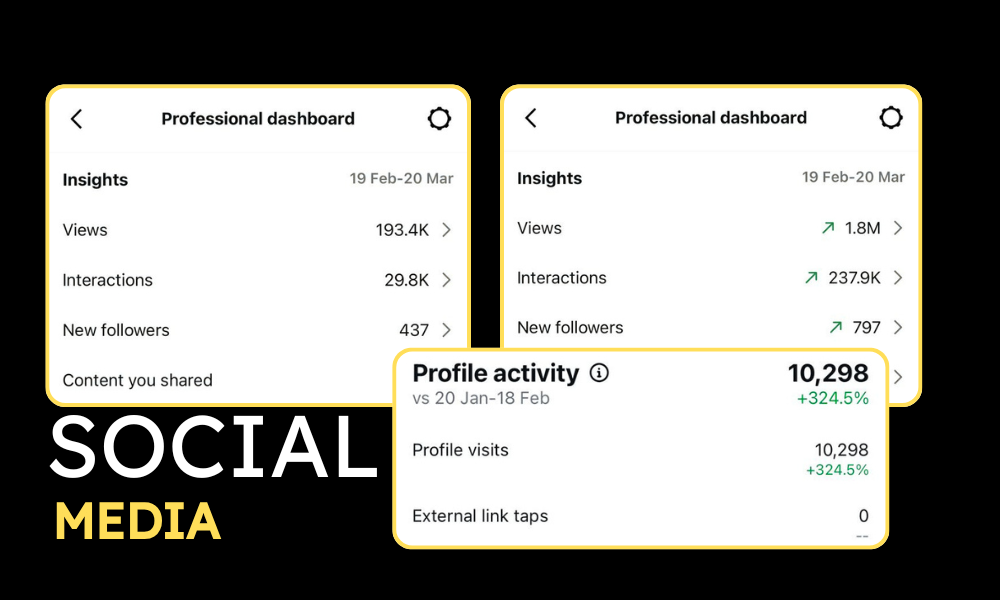
This is a local SEO problem, and it is one of the most fixable problems in all of digital marketing. We have taken businesses from zero local visibility to 5,000 plus searches every single month on Google Maps, and We have done it across markets in the US, UK, Australia, and India. The same checklist works everywhere because Google’s local ranking logic is consistent globally.
What changes is which directories you list your business in. Everything else in this guide applies to your business regardless of where you are based.
Let me walk you through every step.
How Google Decides Who Shows Up in Local Search
Before we get into the checklist, you need to understand the three factors Google uses to rank businesses in local search results. Google calls these relevance, distance, and prominence.
Relevance means how well your business listing matches what the person searched for. This is where most small businesses lose without even knowing it. If your Google Business Profile does not clearly use the keywords your customers are typing, Google simply does not connect the two.
Distance means how close your business is to the person searching. You cannot change your physical location, but you can make sure Google knows exactly where you are and what areas you serve.
Prominence means how well-known and trusted your business appears to Google. This comes from reviews, citations, backlinks, and how active and complete your online presence is.
Every single step in this checklist directly improves one or more of these three factors. Keep that in mind as you work through it.
Step 1: Set Up and Optimise Your Google Business Profile (The Single Biggest Win)
If you do nothing else on this entire checklist, do this. Google Business Profile optimisation is the single most impactful local SEO action a small business can take in 2026. We have seen businesses go from zero interactions to 100 plus interactions per month purely from fixing their Google Business Profile before touching anything else.
Here is exactly what to do.
Claim and verify your listing. Go to google.com/business, and either claim your existing listing or create a new one. Google will send a verification code to your business address. Do not skip this step. An unverified listing has significantly less visibility than a verified one.
Choose the right primary category. This is where most businesses make their first mistake. Your primary category tells Google what your business fundamentally is. Be as specific as possible. “Italian Restaurant” ranks better than “Restaurant.” “Family Law Attorney” ranks better than “Law Firm.” Spend time getting this right.
Write a keyword-rich business description. This is the section most business owners either skip or write in one generic sentence. Your description should naturally include the keywords your customers search for. If you run a home decor store in Melbourne, your description should mention home decor, Melbourne, and the specific types of products you carry. Do not stuff keywords awkwardly. Write for humans first, but make sure the keywords are in there.
Add every service you offer. Google Business Profile has a services section that most businesses leave empty. Fill out every single service with a name and description. Each service description is another opportunity to include relevant keywords and tell Google exactly what you do.
Upload real photos regularly. Businesses with photos get significantly more clicks and directions requests than those without. Add photos of your premises, your products, your team, and your work. And keep adding them. Fresh photos signal to Google that your business is active.
Post updates at least three times a week. Google Business Profile has a posts feature that most businesses completely ignore. Regular posting is one of the fastest ways to signal to Google that your business is active and relevant. Each post can include keywords, a photo, and a call to action. Think of it like a mini social media feed directly on Google.
Step 2: Get Your Website Locally Optimised
Your Google Business Profile and your website work together for local rankings. Here is what to fix on your website.
Add your city and region to your page titles and meta descriptions. If you are a plumber in Manchester, your homepage title should say something like “Emergency Plumber in Manchester,” not just “Plumber” or worse, just your business name. This tells Google and the searcher exactly where you operate.
Create a dedicated location page if you serve multiple areas. If your business serves three cities, create a separate page for each one. Each page should have unique content specific to that location, not copy-pasted content with just the city name swapped. Google penalises duplicate content and rewards genuine location-specific pages.
Make sure your NAP is consistent everywhere. NAP stands for Name, Address, and Phone number. Your business name, address, and phone number must be identical across your website, your Google Business Profile, and every directory listing you have. Even small differences like “St” versus “Street” or a missing suite number can confuse Google and hurt your local rankings. Check this carefully.
Embed a Google Map on your contact page. This is a small but effective signal to Google that ties your website to your physical location. Go to Google Maps, find your business, click Share, and embed the map on your contact page.
Make sure your site loads fast on mobile. The majority of local searches happen on mobile devices. If your website takes more than three seconds to load on a phone, you are losing both visitors and rankings. Use Google’s free PageSpeed Insights tool to check your score and follow its recommendations.
Step 3: List Your Business in Directories That Actually Matter
Citations are mentions of your business name, address, and phone number on other websites. They are one of the strongest local SEO signals available, and in my experience, they show results faster than almost anything else.
But here is the thing most people get wrong about citations. Not all directories are equal, and submitting to hundreds of irrelevant generic directories is a waste of time. The directories that actually move the needle are the ones that are relevant to your specific market and country.
If your business is in India, focus on Indian directories like JustDial, Sulekha, IndiaMART, and IndiaBizDirectory. If you are in the UK, prioritise Yell, Thomson Local, FreeIndex, and the Federation of Small Businesses directory. If you are in Australia, True Local, StartLocal, and the Australian Business Register are your starting points. If you are in the US, Yelp, Yellow Pages, BBB, and Angi are essential.
Beyond country-specific directories, get listed in industry-specific directories relevant to your business type. A restaurant should be on Zomato and TripAdvisor. A legal firm should be on legal-specific directories. A trade business should be on trade-specific platforms. These niche citations carry more weight than generic business directories because they are more relevant to what Google is trying to verify about your business.
The most important thing with every single citation is NAP consistency. Every listing must show your business name, address, and phone number in the same format as your website and Google Business Profile.
Step 4: Build and Manage Google Reviews the Right Way
Google reviews are not just a trust signal for potential customers. They are a direct ranking factor for local search. We have seen reviews make a measurable difference in where businesses appear in Google Maps results. More reviews, higher average rating, and recent review activity all contribute to better local rankings.
Here is how to build reviews properly.
Ask every satisfied customer directly. The simplest way to get more reviews is to ask. Send a follow-up message after a purchase or service with a direct link to your Google review page. Most happy customers are willing to leave a review if you make it easy for them. If you do not ask, most will not do it on their own.
Respond to every single review. This includes the positive ones, not just the negative ones. When you respond to reviews, Google sees that your business is active and engaged. Your responses also appear in your listing and influence how potential customers perceive you. Keep responses genuine, thank the reviewer by name, and, where relevant, naturally include a keyword or two in your response.
Never buy fake reviews. This needs to be said clearly. Fake reviews violate Google’s policies and can result in your listing being suspended entirely. Google’s detection for fake reviews has become significantly more sophisticated. The short-term gain is never worth the long-term risk of losing your entire Google Business Profile.
Address negative reviews professionally. A negative review handled well can actually build more trust than no negative reviews at all. Respond calmly, acknowledge the issue, and offer to resolve it. Never argue publicly. How you handle criticism tells potential customers more about your business than the criticism itself.
Step 5: Create Location-Specific Content That Ranks
This is the most underused tactic in local SEO and the one that separates businesses that plateau from businesses that keep growing their local visibility.
Location-specific content means writing blog posts, guides, and pages that are specifically relevant to your local area and your local customers. This is exactly what we are doing with this blog network, and it works.
A few examples of what this looks like in practice. A financial advisor in Sydney could write “How to Choose a Financial Advisor in Sydney: What to Look For.” A restaurant in Birmingham could write “Best Date Night Spots in Birmingham” and position itself within it. A digital marketing agency serving Indian businesses could write about digital marketing costs in India specifically, which directly answers what local customers are searching.
Each piece of location-specific content creates another page for Google to index, another set of local keywords to rank for, and another reason for local websites to link to you. Over time, this compounds into a serious local authority.
When creating location-specific content, use the name of your city, neighbourhood, or region naturally throughout. Include references to local landmarks, local events, or local industry context where relevant. Make it genuinely useful to someone in that location, not just a generic article with a city name dropped in.
The Biggest Local SEO Mistakes Small Businesses Make
After doing local SEO across four markets and dozens of businesses, these are the mistakes we see most consistently.
Not using keywords in their Google Business Profile. This is the number one thing we fix first on every new client account. Business owners write their profile description in generic language without a single keyword that their customers actually search for. The title, description, services, and even the responses to reviews are all opportunities to include relevant keywords. Leaving them out means Google cannot connect your business to the searches that matter.
Inconsistent NAP across listings. We have seen businesses with fifteen different versions of their address spread across various directories. Some with a full address, some abbreviated, some with old phone numbers. Google cross-references all of these, and inconsistency creates confusion about which information is correct. Clean up your citations and make everything match exactly.
Setting up Google Business Profile once and never touching it again. Local SEO is not a one-time setup. It requires ongoing activity. Regular posts, fresh photos, responding to reviews, and updating your information when anything changes. An inactive profile signals an inactive business to Google.
Ignoring reviews until they have a problem. Most small businesses only think about reviews when they get a bad one. By then, it is too late to have built up the positive review base that would put that negative review in context. Make review generation a consistent part of how you do business, not a crisis response.
Targeting keywords that are too broad. A new business trying to rank for “restaurant” or “plumber” in a major city is competing against businesses with years of authority. Start with hyper-specific local keywords like “vegan restaurant in Shoreditch” or “emergency plumber in Pune.” Win the specific searches first, then build outward.
Your Local SEO Priority Order: What to Do First, Second, Third
You cannot do everything at once. Here is the order that gets you results fastest.
Do this in month one. Claim and fully optimise your Google Business Profile. Fix your NAP consistency across your website. Submit your business to the top five to ten directories relevant to your country and industry. Start asking every customer for a Google review.
Do this in month two. Add location keywords to your website page titles and meta descriptions. Create or improve your location pages if you serve multiple areas. Begin posting on Google Business Profile three times a week consistently. Respond to every review that comes in.
Do this in month three and beyond. Start creating location-specific blog content once or twice a month. Expand your citations to more niche industry directories. Build on your review base by making the ask a standard part of your customer journey. Monitor your Google Search Console and Google Business Profile insights to see what searches are driving your visibility and double down on those topics.
The businesses that follow this order consistently are the ones that show up in the local pack. It is not complicated. It just requires consistency over time.
What to Do Next
Local SEO is one of the highest return investments a small business can make because the results keep compounding long after the initial work is done. A properly optimised Google Business Profile, clean citations, strong reviews, and consistent local content create a foundation that keeps driving traffic and leads month after month without ongoing ad spend.
Start with your Google Business Profile today. Get that right before you touch anything else. Then work through this checklist one step at a time.
If you want a local SEO strategy built specifically for your business and market, get in touch. I have helped businesses across the US, UK, Australia, and India go from invisible to ranking in the local pack, and the process always starts with the same checklist you just read.
FAQ
How long does local SEO take to show results?
Citations and Google Business Profile optimisation tend to show results faster than almost any other SEO activity. Many businesses start seeing increased Google Maps visibility within four to eight weeks of properly optimising their profile and building consistent citations. Full local pack rankings for competitive keywords typically take three to six months of consistent effort.
How many citations do I need for local SEO?
There is no magic number, but quality matters far more than quantity. Twenty consistent, relevant citations on authoritative directories in your country and industry will outperform two hundred listings on irrelevant generic directories. Focus on the directories that matter for your specific market first, then expand from there.
Do Google reviews really affect local rankings?
Yes, directly. Google uses review quantity, average rating, and recency as ranking signals for local search. A business with fifty recent reviews will consistently outrank a similar business with five old reviews, everything else being equal. Make review generation a consistent part of your business operations, not an afterthought.
What is the difference between local SEO and regular SEO?
Regular SEO focuses on ranking your website in standard Google search results for keywords relevant to your business. Local SEO specifically focuses on ranking in Google’s local pack, which is the map-based results that appear when someone searches for a business near them. Local SEO relies heavily on your Google Business Profile, citations, and reviews in addition to the on-page and technical factors that regular SEO for small businesses covers.
Is local SEO free?
The core activities of local SEO, optimising your Google Business Profile, building citations, and generating reviews, can all be done for free. The investment is time rather than money. If you want to accelerate results or do not have the time to manage it yourself, hiring a specialist typically costs between Rs. 5,000 and $500 per month depending on your market, as we cover in detail in our guide on digital marketing costs for small businesses.